
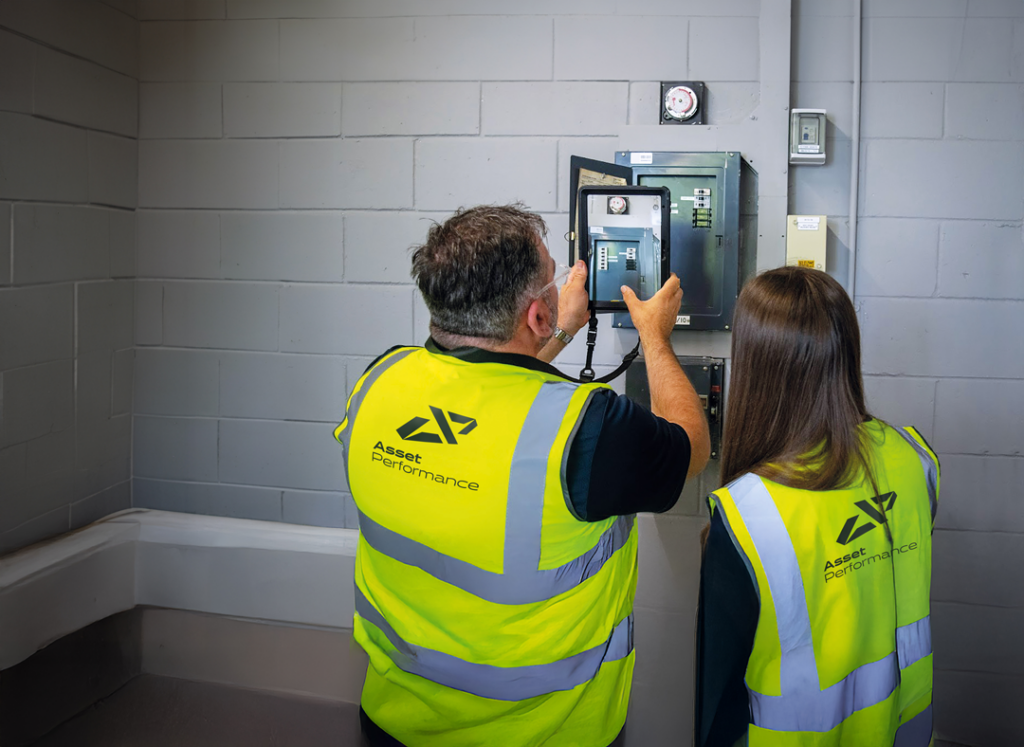

Risk across commercial real estate portfolios rarely presents itself as a single, visible problem.
More often, it accumulates gradually — within ageing assets, incomplete information, deferred investment and assumptions that remain unchallenged over time.
When those risks eventually surface, the consequences can be operational, financial or compliance-related.
Asset performance provides a structured way of understanding that exposure.
Not by attempting to eliminate uncertainty, but by improving visibility of the physical estate and providing the evidence required to make more informed decisions about maintenance, risk and future investment.
For portfolio managers and senior real estate leaders, this changes the conversation.
Instead of responding to risk only when it becomes a problem, organisations can begin identifying where exposure exists, how significant it is and what should be prioritised next.
Risk is often a visibility problem first
Many asset-related risks are made harder to manage because the underlying assets aren’t sufficiently understood.
Incomplete asset registers, inconsistent condition information and fragmented reporting create blind spots.
Assets may remain in service with limited understanding of their physical condition. Maintenance strategies may be based on outdated information. Future investment requirements can remain hidden until intervention becomes unavoidable.
At portfolio scale, those individual uncertainties accumulate.
An issue affecting one asset may be relatively insignificant. The same issue repeated across hundreds of similar assets, multiple buildings or an entire region can represent a much greater operational or financial exposure.
Effective asset performance improves visibility at both levels.
It allows organisations to understand individual assets while also identifying patterns across the wider estate.
Addressing that uncertainty starts with establishing asset data that can be trusted across the portfolio.
Understanding risk at asset level
Portfolio-level risk ultimately begins with individual assets and systems.
Understanding that risk requires more than knowing an asset’s age or whether it currently operates.
A stronger assessment considers factors such as:
- physical condition;
- operational criticality;
- remaining useful life;
- consequence of failure;
- compliance considerations; and
- potential financial impact.
These factors provide context.
An asset in poor condition isn’t automatically the highest priority if its failure would have little operational consequence or appropriate redundancy exists.
Conversely, an asset in reasonable condition may warrant closer attention if its failure could interrupt a critical operation.
This combination of condition and consequence allows organisations to establish more meaningful priorities.
Condition provides evidence of emerging risk
Condition assessment provides an opportunity to identify deterioration before it necessarily results in failure.
Physical assessment can highlight assets requiring further investigation, maintenance, refurbishment or replacement.
That information becomes considerably more valuable when collected consistently across an estate.
Instead of viewing each condition issue independently, portfolio managers can identify:
- concentrations of poor-condition assets;
- recurring issues within particular asset classes;
- buildings carrying disproportionate exposure;
- assets approaching future intervention; and
- potential areas requiring further technical or compliance investigation.
This moves risk management away from anecdotal understanding and towards an evidence-based view of the physical estate.
Compliance starts with understanding the asset base
Compliance management relies upon organisations knowing which assets exist and which obligations apply to them.
If the underlying asset information is incomplete, processes built around that information can also contain gaps.
Asset verification therefore provides an important foundation.
A reliable asset baseline can help organisations identify relevant maintainable assets and support the inspection, testing and maintenance processes associated with them.
Condition assessment can provide further evidence of physical deterioration or potential issues requiring investigation.
Neither activity independently demonstrates that an organisation or individual asset is compliant.
Instead, they provide better visibility of the physical estate from which compliance obligations can be managed.
That distinction is important when managing complex portfolios where information may have been inherited from multiple systems, surveys and service providers.
Moving from reactive response to planned intervention
Reactive asset failure is difficult to manage because both the timing and consequences are uncertain.
Emergency repairs can attract additional cost. Unplanned outages can disrupt operations. Assets requiring immediate replacement can force expenditure into budgets that weren’t prepared for it.
Not every failure can be predicted or prevented.
But better asset information can increase the opportunity for intervention to be planned.
Where condition deterioration is identified and the operational consequences understood, organisations can decide whether the appropriate response is:
- additional maintenance;
- further technical investigation;
- refurbishment;
- planned replacement; or
- continued operation with appropriate monitoring.
The objective isn’t simply to remove risk.
It is to understand and manage it deliberately.
Prioritising risk across a portfolio
Managing asset risk becomes substantially more difficult as estates grow.
A portfolio may contain thousands of maintainable assets across different buildings, regions and operational environments.
Every location will have competing requirements.
Applying a consistent approach to asset verification, condition assessment and risk prioritisation allows those requirements to be compared using common criteria.
Portfolio teams can then begin asking:
Where is our greatest operational exposure?
Which buildings contain the highest concentration of deteriorating assets?
Which asset classes require the most attention?
Where should limited capital be prioritised first?
This enables investment and maintenance resources to be considered at portfolio level rather than allocated purely in response to individual site requests.
Connecting risk with CAPEX and lifecycle planning
Understanding risk is only useful if it influences what happens next.
Condition and criticality information can provide important inputs into lifecycle and capital planning.
Assets presenting greater exposure can be considered alongside expected remaining life and replacement cost to determine future intervention requirements.
This allows organisations to connect three important questions:
What is the risk?
When are we likely to need to act?
What is the likely financial requirement?
Across a large estate, answering those questions consistently creates much greater visibility of future financial exposure.
Capital programmes can then reflect both expected lifecycle requirements and the relative risks associated with delaying intervention.
Our guide to condition-led lifecycle planning and CAPEX certainty explores this relationship in greater detail.
Asset performance and stronger governance
Evidence-based asset information also supports wider governance.
When investment decisions are challenged, organisations need to be able to explain why particular requirements have been prioritised over others.
A structured asset performance approach provides traceability between the physical evidence and the resulting recommendation.
Stakeholders can understand the underlying condition, risk, assumptions and financial implications rather than simply receiving a proposed expenditure figure.
This becomes particularly valuable where decisions involve multiple stakeholders across estates, finance, operations and executive leadership.
For organisations applying formal asset management frameworks, including principles associated with ISO 55001, this evidence-led approach can also support wider asset management and risk-management processes.
Reducing risk without creating unnecessary complexity
More sophisticated risk models aren’t automatically more useful.
A methodology can capture an enormous number of variables and still fail if stakeholders cannot understand or use its output.
The appropriate level of assessment should be determined by the decisions it needs to support.
For portfolio-level asset planning, the objective is usually to identify and consistently differentiate material areas of exposure.
Detailed specialist investigation can then be targeted where the initial evidence demonstrates that it is required.
This keeps asset risk management proportionate.
Enough information is captured to make informed decisions without creating datasets and methodologies that become impractical to maintain.
Risk should inform investment, not simply identify problems
Risk is often viewed solely as something that needs to be eliminated.
Within asset management, it can also provide a means of prioritisation.
Understanding where exposure exists allows organisations to concentrate maintenance, investigation and capital investment where intervention is likely to provide the greatest value.
Higher-risk requirements can receive greater attention.
Lower-risk requirements can be managed proportionately.
This becomes particularly important when budgets are constrained and organisations cannot address every identified requirement simultaneously.
The objective isn’t a portfolio without risk.
It is a portfolio where risk is visible, understood and reflected in the decisions being made.
Asset risk changes over time
Risk isn’t static.
Assets deteriorate, maintenance changes their condition, projects replace equipment and operational requirements evolve.
Portfolio risk therefore needs to be reconsidered as the physical estate changes.
Maintaining reliable asset information and periodically reassessing condition allows organisations to understand how exposure is changing.
This creates a more dynamic relationship between asset information, maintenance and capital planning.
Instead of risk being assessed once and recorded within a report, it becomes part of the ongoing understanding of the estate.
Bringing risk, condition and investment together
Managing asset risk across commercial real estate portfolios ultimately requires several disciplines to work together.
Asset verification establishes what is present.
Condition assessment provides evidence of physical state.
Risk and criticality provide context around the consequences of deterioration or failure.
Lifecycle planning considers when intervention may be required.
CAPEX planning establishes the potential financial implications.
And asset data analytics allows that information to be understood across buildings and portfolios.
This is where asset performance becomes particularly valuable.
Rather than treating condition, risk and investment as separate conversations, they become different views of the same physical estate.
At Asset Performance, our approach is built around creating those connections — establishing reliable asset information and turning it into evidence that supports maintenance, risk and investment decisions.
This connection between physical evidence and strategic decision-making sits at the heart of asset performance in commercial real estate portfolios.
Because effective risk management starts with something relatively simple:
Understanding what you have, where the exposure sits and what needs to happen next.
Lets Talk
Contact Us
We work with asset owners, FM providers, and consultants to deliver clear, data-led insight across complex estates. Whether you're exploring an initial survey or looking to improve long-term asset performance, get in touch and we’ll point you in the right direction.
408, The White Studios, Templeton St, Glasgow