

Capital planning in commercial real estate is rarely short of data.
What it often lacks is certainty.
Five- and ten-year plans are produced, reviewed and revised, yet many portfolios continue to experience unplanned expenditure, deferred investment and reactive decision-making.
The problem isn’t necessarily the absence of financial models or planning processes.
It is often the disconnect between those plans and the actual condition of the physical assets across the estate.
Lifecycle planning becomes considerably more valuable when financial forecasting is grounded in verified asset information and condition data. This creates a clearer relationship between engineering reality and future capital requirements — giving organisations greater confidence in what needs investment, when and why.
Why CAPEX plans lose credibility over time
Capital plans inevitably contain assumptions.
Expected asset life, installation dates, replacement costs and anticipated year of expenditure all contribute to forecasting future requirements.
These assumptions provide a useful starting point.
Problems arise when they aren’t subsequently tested against what is actually happening within the estate.
An asset expected to operate for 20 years may deteriorate significantly earlier because of its operating environment or maintenance history. Another may remain in good condition beyond its anticipated replacement date.
Over time, these differences accumulate.
The result can be:
- assets failing earlier than forecast;
- unnecessary replacement of assets that remain serviceable;
- planned interventions being repeatedly deferred;
- emergency expenditure disrupting capital programmes; and
- declining stakeholder confidence in lifecycle forecasts.
A lifecycle model therefore shouldn’t be treated as a fixed prediction of the future.
It should evolve as the organisation’s understanding of its assets improves.
Condition strengthens lifecycle planning
Asset age remains an important component of lifecycle modelling.
But age alone cannot explain how an asset has been operated, maintained or affected by its environment.
Two identical assets installed in the same year can reach very different physical conditions.
Condition assessment provides additional evidence.
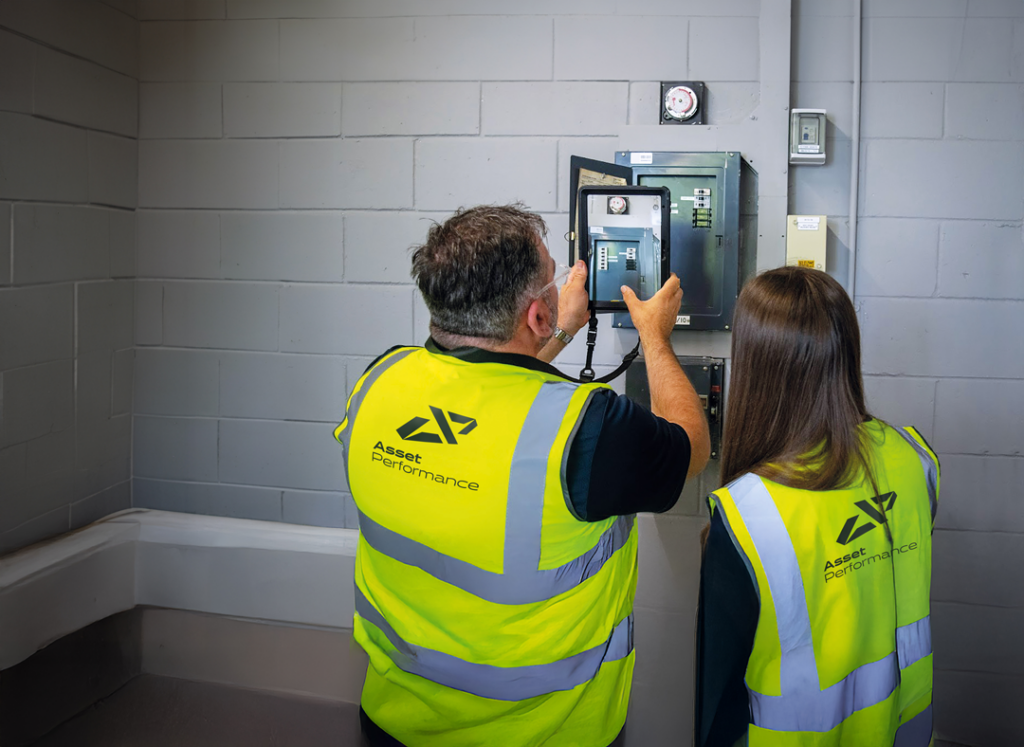
By physically assessing assets, organisations can develop a clearer understanding of their current state and identify where deterioration may influence anticipated remaining life or future intervention.
That information becomes even more useful when considered alongside factors such as:
- asset age;
- operational criticality;
- consequence of failure;
- maintenance history;
- compliance considerations; and
- replacement cost.
Lifecycle planning can then move beyond generic replacement assumptions towards a more condition-informed view of future investment requirements.
The reliability of this analysis still depends on the quality of the underlying information, which is why asset data integrity provides the foundation for portfolio-level planning.
From individual assets to portfolio-level decisions
The challenge increases considerably as estates grow.
Capital decisions across commercial real estate portfolios are rarely made one asset at a time.
Investment needs to be considered across buildings, regions and asset classes — usually within a constrained budget.
Consistent asset and condition information allows individual requirements to be aggregated into a wider portfolio view.
Portfolio managers can begin identifying:
- concentrations of deteriorating assets;
- buildings carrying disproportionate lifecycle exposure;
- asset classes approaching significant replacement periods;
- common risks across multiple locations; and
- periods where forecast expenditure is likely to peak.
Instead of considering each requirement independently, organisations can compare competing investment priorities using a common evidence base.
This is where lifecycle planning begins moving from an engineering exercise into a strategic portfolio planning tool.
Prioritising investment according to risk
Not every asset approaching the end of its expected life needs to be replaced immediately.
Similarly, the most expensive asset isn’t automatically the highest priority.
Effective capital planning needs to consider the consequences associated with intervention — or the absence of it.
An asset in relatively poor condition may present limited operational risk because redundancy exists elsewhere.
Another asset in apparently better condition may support a critical process where failure would create significant operational disruption.
Condition-led lifecycle planning allows these factors to be considered together.
Priorities can incorporate:
Condition — what physical state is the asset in?
Criticality — how important is it to the operation?
Consequence — what happens if it becomes unavailable?
Compliance — are there additional obligations or risks associated with it?
Cost — what is the anticipated financial requirement?
This creates a more nuanced investment strategy than blanket age-based replacement.
Capital can be directed towards the requirements where intervention provides the greatest benefit or addresses the greatest exposure.
This relationship between condition, criticality and consequence is also fundamental to managing asset risk across commercial real estate portfolios.
Translating engineering evidence into financial clarity
One of the most important roles of lifecycle planning is connecting technical understanding with financial decision-making.
An engineering assessment may identify deterioration, but senior stakeholders need to understand what that means for future expenditure.
A structured lifecycle model can connect condition and asset information with:
- estimated replacement costs;
- anticipated year of intervention;
- short-, medium- and long-term expenditure;
- risk and criticality;
- alternative investment scenarios; and
- portfolio-level financial exposure.
This creates a clearer line between the physical evidence and the capital programme.
Rather than presenting stakeholders with a replacement figure alone, organisations can demonstrate what requires investment, why it has been prioritised and what assumptions underpin the forecast.
That makes capital programmes easier to scrutinise, challenge and ultimately defend.
Understanding future financial exposure
One of the greatest benefits of portfolio-level lifecycle planning is visibility beyond the next budget cycle.
Individual asset replacements can appear manageable in isolation.
When thousands of assets are considered together, a very different picture can emerge.
An organisation may discover significant concentrations of expenditure in particular years, buildings or asset classes.
Identifying those pressures early creates options.
Investment can potentially be phased, interventions reassessed, budgets prepared or wider estate decisions considered before the requirement becomes immediate.
Lifecycle planning therefore isn’t simply about calculating replacement costs.
It helps organisations understand where future financial exposure exists across the estate and how that exposure changes over time.
Lifecycle planning should be dynamic
A lifecycle plan represents the best available view at a particular point in time.
It shouldn’t remain static.
Assets continue to age. Maintenance and refurbishment can alter their condition. Projects replace equipment. Buildings are acquired, modified or disposed of.
The underlying lifecycle model should be capable of reflecting those changes.
Refreshing condition information and maintaining the asset baseline allows forecasts to be revisited as new evidence becomes available.
An asset originally anticipated for replacement in year three may remain serviceable for longer.
Another may deteriorate faster than expected and require earlier intervention.
This creates a more adaptive approach to capital planning.
Rather than repeatedly replacing one set of assumptions with another, organisations can progressively improve the evidence supporting the forecast.
CAPEX certainty doesn’t mean predicting the future perfectly
No lifecycle model can predict precisely when every asset will fail or exactly what every future replacement will cost.
That isn’t the objective.
CAPEX certainty is about reducing uncertainty enough to make better decisions.
A condition-informed lifecycle plan provides greater confidence that:
- investment priorities are supported by physical evidence;
- future liabilities are visible;
- risks can be considered alongside expenditure;
- budgets reflect identifiable requirements; and
- changes to the capital programme can be explained and defended.
For finance, operations, estates and executive teams, that creates a shared understanding of both the physical and financial position of the portfolio.
Lifecycle planning within asset performance
Lifecycle planning doesn’t operate independently.
It relies upon the quality of the information feeding it.
Asset verification establishes what is present.
Condition assessment establishes the physical state of those assets.
Lifecycle modelling considers when future intervention may be required.
CAPEX planning translates those requirements into a structured investment programme.
And asset data analytics allows risk and financial exposure to be understood across the wider portfolio.
Together, they form part of the wider approach to asset performance across commercial real estate portfolios.
Building CAPEX certainty across commercial portfolios
The objective of lifecycle planning isn’t to produce the largest possible spreadsheet of future replacements.
It is to provide organisations with a clearer understanding of what investment is likely to be required, where, when and why.
Condition assessment strengthens that understanding by replacing some of the assumptions within traditional lifecycle models with evidence from the physical estate.
Applied consistently across a portfolio, the result is more than a capital forecast.
It becomes an evidence base for prioritising investment, understanding future financial exposure and making better long-term decisions about the estate.
At Asset Performance, we connect physical asset verification and condition assessment with lifecycle and CAPEX planning to help organisations move from understanding today’s estate to planning what happens next.
Condition provides the evidence. Lifecycle planning provides the horizon. CAPEX planning turns both into action.
Lets Talk
Contact Us
We work with asset owners, FM providers, and consultants to deliver clear, data-led insight across complex estates. Whether you're exploring an initial survey or looking to improve long-term asset performance, get in touch and we’ll point you in the right direction.
408, The White Studios, Templeton St, Glasgow