

In commercial real estate, “asset performance” is a phrase used frequently but rarely defined with much consistency.
For some organisations, it means reducing operating costs. For others, the focus is sustainability, compliance or capital planning. In practice, asset performance is none of these things in isolation.
Asset performance is about how well the physical estate supports operational, financial and strategic decision-making over time.
That requires more than dashboards, benchmarks or periodic surveys. It requires confidence in the underlying asset data, a clear understanding of condition and risk, and the ability to translate engineering reality into actionable plans across an entire portfolio.
For portfolio managers and senior real estate leaders, that distinction matters.
Decisions are rarely made at the level of an individual asset. They are made across buildings, regions and portfolios — often using information inherited from different systems, surveys and service providers.
Effective asset performance provides the evidence needed to make those decisions with greater confidence.
Asset performance is not facilities management
One of the most common misconceptions is that asset performance is simply an extension of facilities management.
The two are closely connected, but they serve different purposes.
Facilities management focuses on keeping buildings and their services operating.
Asset performance focuses on understanding how those assets are performing, where risk exists and what needs to happen next.
The difference becomes increasingly important as portfolios scale.
Across large estates, inconsistencies inevitably develop:
- asset registers vary between sites, contractors or regions;
- condition information becomes outdated;
- lifecycle assumptions are inherited rather than validated; and
- capital plans can become disconnected from physical asset condition.
Day-to-day FM operations may continue effectively while visibility of longer-term asset performance gradually deteriorates.
The organisation can still maintain its buildings, but answering questions about future risk, investment and lifecycle exposure becomes increasingly difficult.
Asset performance reconnects operational understanding with longer-term estate strategy.
The foundation: knowing what you actually have
Almost every asset performance conversation eventually comes back to the same question:
How confident are you in your asset data?
Across complex commercial estates, asset information is frequently fragmented between CAFM systems, spreadsheets, historic surveys, maintenance records and previous reports.
Even where sophisticated systems are in place, their value ultimately depends upon the quality of the information within them.
Missing assets, inconsistent classifications, outdated records and incomplete attributes can all undermine confidence in the dataset.
This matters because that information supports decisions around:
- maintenance strategy;
- compliance management;
- lifecycle planning;
- capital forecasting; and
- risk prioritisation.
If the underlying asset baseline is unreliable, every subsequent layer of analysis contains a degree of uncertainty.
Effective asset performance therefore starts with verified, consistent asset-level information.
Asset verification and structured data capture establish what is present across the estate. Condition assessment then adds an understanding of the physical state of those assets and where intervention may be required.
Together, they establish the evidence base upon which wider asset decisions can be made.
For a deeper look at why this matters, asset data integrity is the foundation of portfolio performance, influencing everything from maintenance planning to lifecycle forecasting and investment decisions.
From condition to clarity
Collecting asset data is only the beginning.
The value comes from what happens next.
Condition surveys are sometimes treated as isolated exercises undertaken to satisfy a particular requirement or provide a snapshot of an estate.
Within a wider asset performance strategy, that same information becomes a decision-making tool.
When condition information is collected consistently across a portfolio, organisations can begin identifying patterns:
- asset classes approaching the end of their expected life;
- systems presenting disproportionate risk;
- concentrations of deteriorating assets within particular buildings;
- deferred investment requirements; and
- areas requiring further compliance or technical investigation.
Rather than reacting to individual issues as they occur, portfolio teams can begin prioritising activity according to condition, criticality, cost and operational consequence.
Performance moves from anecdotal understanding to evidence-based decision-making.
Lifecycle planning is an asset discipline, not simply a finance exercise
Lifecycle planning is frequently expressed as a financial forecast.
But the numbers are only meaningful if the assumptions behind them reflect the physical estate.
Generic replacement cycles and asset-age assumptions provide a useful starting point, but they cannot independently account for how assets have actually performed, how they have been maintained or the environment in which they operate.
A stronger lifecycle plan combines financial modelling with engineering evidence.
Assets can be considered according to factors including:
- actual condition;
- operational criticality;
- consequence of failure;
- compliance considerations;
- remaining useful life; and
- estimated replacement cost.
This creates a clearer connection between physical condition and future financial exposure.
Capital requirements can then be modelled over multiple years and prioritised according to evidence rather than simply asset age.
For decision-makers, this provides something particularly valuable: an explanation of why investment is required, where it should be prioritised and when it is likely to become necessary.
We explore this relationship further in From Condition Surveys to CAPEX Certainty, including how condition-led lifecycle planning can strengthen long-term capital forecasts.
Asset performance at portfolio scale
The value of this approach becomes more apparent as portfolios grow.
Large commercial estates introduce complexity that cannot always be seen when buildings are considered individually.
Different locations may contain different building types, asset ages, operational requirements and historic data standards. Assessments may also have been undertaken at different times by different organisations.
Without a consistent methodology, comparing those buildings becomes difficult.
Effective asset performance establishes common approaches to asset classification, data capture, condition grading and reporting.
That enables like-for-like comparison across the portfolio.
Instead of asking only which assets require attention within one building, organisations can begin asking:
Which buildings carry the greatest risk?
Where is future CAPEX concentrated?
Which asset classes present common problems across multiple locations?
Where should limited investment be prioritised first?
That is a fundamentally different level of asset understanding.
Risk, compliance and the cost of poor visibility
Asset risk doesn’t always announce itself through a major failure.
It can accumulate gradually through ageing equipment, incomplete records, deferred maintenance or assets whose condition is simply not well understood.
When asset information is incomplete, some of that risk can remain hidden until it becomes an operational problem.
Connecting asset verification, condition, criticality and lifecycle information provides organisations with greater visibility of where potential exposure exists.
This doesn’t replace specialist compliance inspections, statutory testing or engineering assessment.
Instead, it provides a stronger asset baseline from which those activities can be managed and prioritised.
For organisations operating formal asset management systems, including those aligned with ISO 55001 principles, reliable information and evidence-based decision-making are particularly important.
But the principle applies regardless of whether an organisation is pursuing formal certification:
You cannot effectively manage asset risk without understanding where that risk exists.
This becomes particularly important at portfolio scale, where managing asset risk across commercial real estate requires condition, criticality and future investment requirements to be considered together.
Asset performance should enable decisions, not create another reporting layer
One of the easiest mistakes to make is treating asset performance as a dashboard.
Visualisation is useful, but presenting information differently doesn’t inherently improve the information itself.
The objective should be to make better decisions.
Reliable asset intelligence can inform:
- maintenance strategy;
- capital investment;
- lifecycle planning;
- mobilisation and procurement;
- compliance management; and
- wider estate strategy.
Dashboards and analytics can make that information easier to interrogate and understand, but they sit on top of the asset evidence rather than replacing it.
For senior stakeholders, this can simplify complex estate conversations.
Instead of different teams working from different assumptions, decisions can be grounded in a shared understanding of the physical estate.
Why asset performance matters
Commercial real estate portfolios are being asked to achieve more with finite resources.
At the same time, many estates contain ageing assets, evolving compliance requirements and significant future investment obligations.
Against that backdrop, relying on incomplete data or inherited assumptions makes long-term planning increasingly difficult.
Asset performance provides greater control.
Control over asset information.
Control over risk.
Control over future investment.
That doesn’t mean every failure can be predicted or every future cost known precisely.
It means organisations can make decisions using a much stronger evidence base.
Bringing asset performance into practice
Asset performance isn’t a single service.
It is the outcome of several connected disciplines working together.
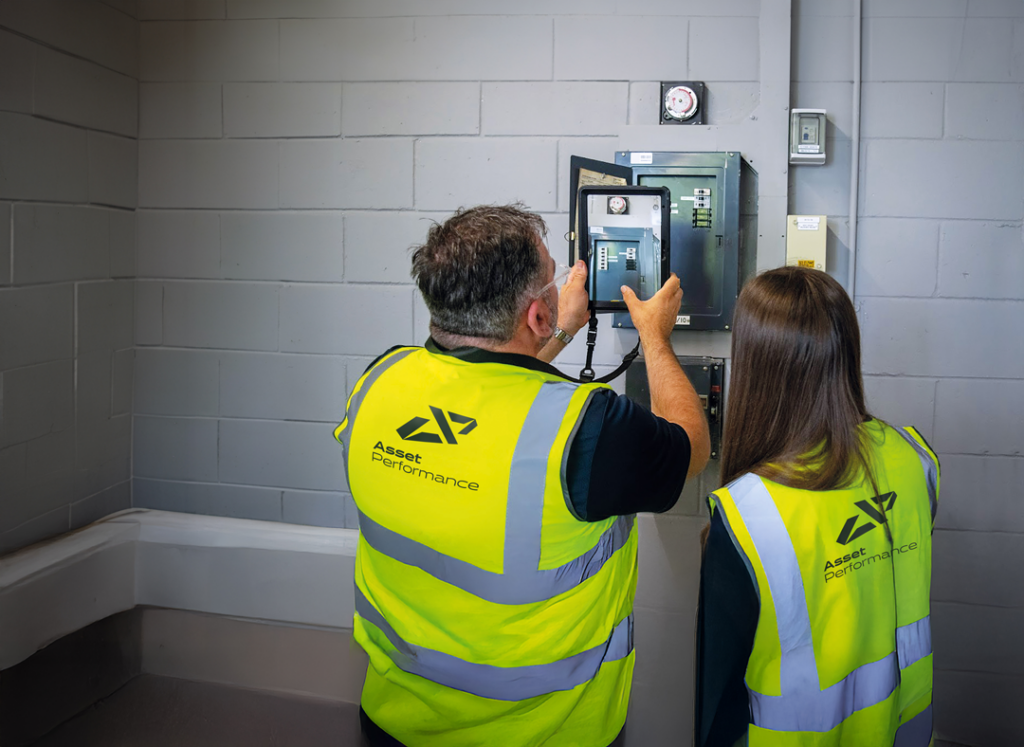
At Asset Performance, that starts with understanding the physical estate through asset verification and condition assessment.
That information can then support maintenance strategy, compliance management, lifecycle planning and CAPEX forecasting, while asset data analytics provides the means to understand patterns and exposure across increasingly complex portfolios.
The objective is to create a clear progression:
Verify what you have.
Assess its condition.
Understand the risk.
Plan what happens next.
For commercial real estate leaders, that creates something more valuable than another asset report.
It creates the evidence needed to make better decisions across the lifecycle of the estate.
Lets Talk
Contact Us
We work with asset owners, FM providers, and consultants to deliver clear, data-led insight across complex estates. Whether you're exploring an initial survey or looking to improve long-term asset performance, get in touch and we’ll point you in the right direction.
408, The White Studios, Templeton St, Glasgow