

Asset performance is often discussed in terms of outcomes: reduced risk, better planning and greater control over future investment.
But those outcomes depend on something much more fundamental.
The underlying asset data has to be reliable.
Without confidence in that foundation, maintenance strategies, lifecycle forecasts and capital plans inevitably contain uncertainty. Decisions may still be made, but they are being made using assumptions rather than verified evidence.
Across commercial real estate portfolios, asset information is frequently inherited from different systems, surveys, service providers and historic records. Over time, this can create a widening gap between what an organisation believes it knows about its assets and what is actually present across the physical estate.
For portfolio managers, that gap is where asset performance begins to deteriorate.
Understanding the wider relationship between data, condition, risk and investment is central to what asset performance means across commercial real estate portfolios.
What is asset data integrity?
Asset data integrity isn’t simply about having an asset register.
It means having accurate, consistent and verifiable information that provides a reliable representation of the maintainable assets across an estate.
In practical terms, that means asset information that is:
- physically verified rather than assumed solely from drawings or legacy records;
- captured consistently across sites and portfolios;
- structured appropriately for CAFM, FM and wider asset management systems;
- sufficiently detailed to support the decisions being made from it; and
- maintained through clear ownership and governance.
The distinction is important.
An organisation can possess an extensive asset register without necessarily possessing reliable asset information.
If assets are missing, duplicated, incorrectly classified or populated with incomplete attributes, the register may satisfy a system requirement while still providing a weak foundation for decision-making.
The hidden cost of poor asset data
Poor asset information doesn’t necessarily result in an immediate or obvious failure.
Instead, it introduces uncertainty and inefficiency into the processes that depend upon it.
Maintenance teams may need to validate information before acting. Lifecycle forecasts can rely heavily on generic assumptions. Procurement exercises may be based on an inaccurate understanding of the maintainable estate.
Across a large portfolio, those problems compound.
Common indicators of poor asset data integrity include:
- duplicate or missing assets;
- inconsistent naming and classification;
- incorrect or outdated locations;
- missing manufacturer, model or capacity information;
- incomplete maintenance attributes;
- inconsistent condition assessments; and
- lifecycle assumptions that no longer reflect the physical asset.
Individually, these issues may appear relatively minor.
At portfolio scale, they can significantly reduce confidence in maintenance, risk and investment decisions.
Why CAFM systems don’t solve poor asset data
CAFM and asset management platforms are powerful tools.
But the quality of their outputs remains dependent upon the quality of the information they contain.
A sophisticated system populated with incomplete or unreliable asset information can create an illusion of accuracy. Reports can be generated and dashboards populated, while the underlying dataset remains questionable.
Technology therefore doesn’t remove the requirement for reliable asset data.
It makes reliable data more valuable.
Before or alongside CAFM implementation, mobilisation or data migration, organisations need to establish whether the underlying asset information accurately reflects the physical estate.
Once that baseline is established, technology can do what it does best: organise, interrogate, visualise and maintain that information at scale.
The system is the enabler.
The asset data remains the foundation.
The role of asset verification
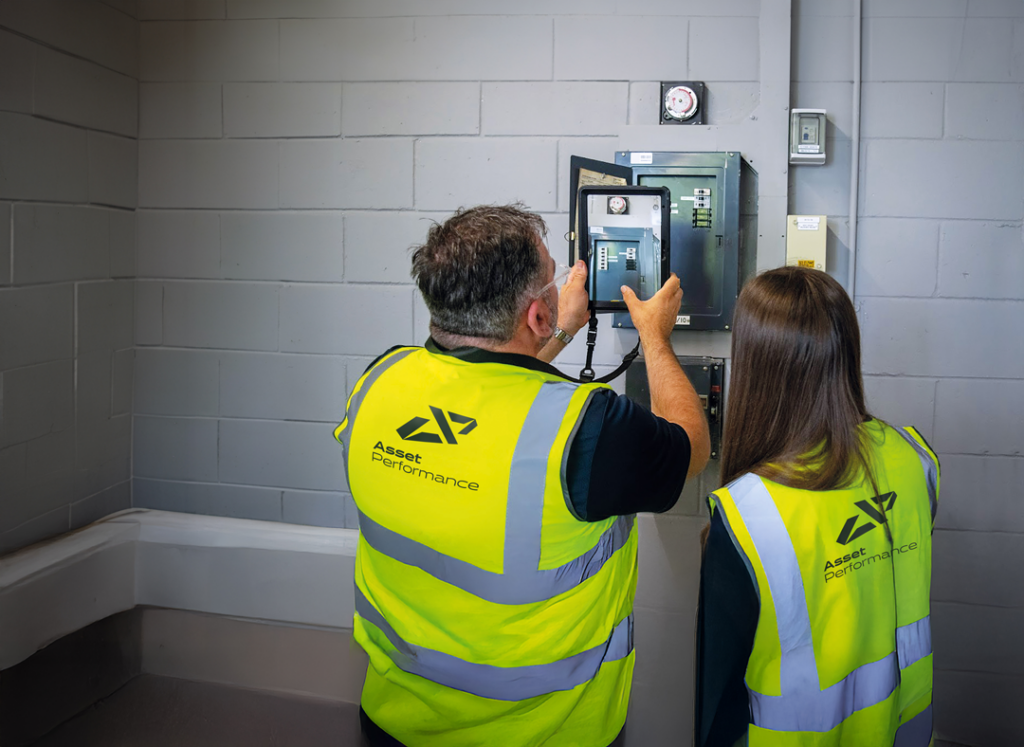
Asset verification establishes what is actually present across the estate.
Physical verification can confirm assets, locations and relevant attributes while identifying differences between the physical environment and existing records.
Depending on the requirements of the project, that information can then be structured according to an agreed asset hierarchy and data standard.
This provides something considerably more useful than simply increasing the number of rows within an asset register.
It creates a verified asset baseline.
That baseline can subsequently support maintenance planning, procurement, mobilisation, compliance processes and wider asset management activity.
For organisations inheriting estates, changing FM providers or consolidating information from multiple systems, establishing that baseline can be particularly valuable.
Adding condition to the asset baseline
Verification tells an organisation what it has.
Condition assessment begins to explain what state those assets are in.
Combining the two creates a much richer understanding of the estate.
Condition information can help identify assets showing signs of deterioration and, when considered alongside criticality and remaining life, provide evidence for future intervention and investment decisions.
This can support:
- maintenance strategy;
- lifecycle planning;
- CAPEX forecasting;
- risk prioritisation; and
- wider estate strategy.
Importantly, the information can be traced back to physical assessment rather than relying solely on historic assumptions.
This is the point at which the asset register begins moving beyond inventory and towards asset intelligence.
The next stage is translating that evidence into future investment requirements through condition-led lifecycle and CAPEX planning.
Consistency matters as much as detail
One of the biggest challenges across large portfolios is inconsistency.
Different sites may have been surveyed by different organisations using different asset hierarchies, naming conventions and condition methodologies.
Each dataset may be useful individually while being difficult to compare collectively.
That’s a problem for portfolio-level decision-making.
Asset data integrity therefore requires more than accurate information at individual sites. It requires consistency across the estate.
Common approaches to asset classification, attribute capture and condition assessment allow information to be compared on a like-for-like basis.
Portfolio managers can then begin asking broader questions:
Which locations contain the greatest concentration of poor-condition assets?
Where is lifecycle expenditure likely to be highest?
Are particular asset classes presenting common problems across multiple sites?
Where should investment be prioritised first?
Consistency is what allows individual asset records to become meaningful portfolio intelligence.
Capturing the data that actually matters
More data isn’t automatically better data.
Modern surveying technologies make it possible to capture extensive information about physical assets, but every additional attribute has a cost associated with collecting, validating and maintaining it.
The objective should therefore be to determine which information is genuinely required to support the organisation’s decisions.
That will vary according to the purpose of the project.
A dataset intended primarily to support maintenance may require different information from one being developed for lifecycle modelling or capital planning.
Defining those requirements before surveying begins helps avoid two common problems:
too little information to support the required decisions, or too much information to maintain effectively.
A strong asset data model balances detail with practicality.
Asset data as a performance enabler
Once confidence in the asset baseline improves, the conversation changes.
Instead of asking whether the information can be trusted, stakeholders can concentrate on what it is telling them.
Maintenance strategies can be aligned more closely with the physical asset base.
Lifecycle plans can incorporate actual condition.
Capital programmes can be developed using stronger evidence of future requirements.
Potential asset and compliance risks can be identified and investigated earlier.
In this way, asset data integrity becomes a performance enabler rather than an administrative exercise.
Its value isn’t the dataset itself.
Its value is the quality of the decisions that dataset enables.
Maintaining asset data integrity over time
A verified asset register is not permanently accurate.
Buildings change.
Assets are replaced, removed and added. Maintenance activity alters condition. Capital projects modify systems. Portfolios acquire and dispose of properties.
Without appropriate processes, even a high-quality dataset will gradually deteriorate.
Long-term asset data integrity therefore depends upon governance.
Organisations need to establish responsibility for maintaining information and processes for reflecting physical changes within the asset record.
This may include integration with maintenance, project handover, asset replacement and mobilisation processes.
The objective is to prevent the familiar cycle of:
survey → clean data → gradual deterioration → another survey to establish what is actually there.
A strong asset information strategy treats data integrity as an ongoing discipline rather than a periodic correction exercise.
From asset data to better decisions
Asset data integrity is rarely the most visible element of asset management.
When it works properly, it largely disappears into the background.
Its value becomes visible elsewhere:
fewer assumptions, more consistent planning, clearer investment priorities and greater confidence in the physical estate.
At Asset Performance, establishing that reliable baseline is the starting point for much of what follows.
Asset verification establishes what is present.
Condition assessment establishes its physical state.
Lifecycle and CAPEX planning translate that information into future requirements.
Asset data analytics allows patterns, risk and financial exposure to be understood across increasingly complex portfolios.
The principle connecting all of them is simple:
Better asset decisions start with asset data you can trust.
Lets Talk
Contact Us
We work with asset owners, FM providers, and consultants to deliver clear, data-led insight across complex estates. Whether you're exploring an initial survey or looking to improve long-term asset performance, get in touch and we’ll point you in the right direction.
408, The White Studios, Templeton St, Glasgow