

Manufacturing environments place very different demands on physical assets than many conventional commercial estates.
Building services remain important, but they represent only part of the picture. Production equipment, supporting infrastructure, critical components and the facilities that house them can all influence operational performance.
Effective technical asset management therefore requires a broader understanding of the assets that support production — their condition, criticality, maintenance requirements, remaining life and potential consequence of failure.
For manufacturers, developing that understanding can help reduce operational risk, improve maintenance decisions and provide greater visibility of future investment requirements.
What is technical asset management in manufacturing?
Technical asset management is the structured management of physical assets throughout their operational lifecycle.
In a manufacturing environment, this can extend beyond traditional mechanical and electrical building services to include production-related assets and infrastructure that directly or indirectly support manufacturing operations.
The objective is not simply to maintain a list of equipment.
It is to understand what assets exist, what condition they are in, how critical they are to operations and what investment they are likely to require throughout their remaining life.
That creates a stronger evidence base for maintenance, lifecycle and capital planning decisions.
Understanding the complete asset environment
One of the challenges within manufacturing facilities is the relationship between production assets and the infrastructure supporting them.
A production line does not operate independently of the building around it.
Its continued operation may depend upon electrical distribution, compressed air, cooling, ventilation, controls, water systems or other supporting infrastructure.
A failure elsewhere within that chain can therefore have consequences for production.
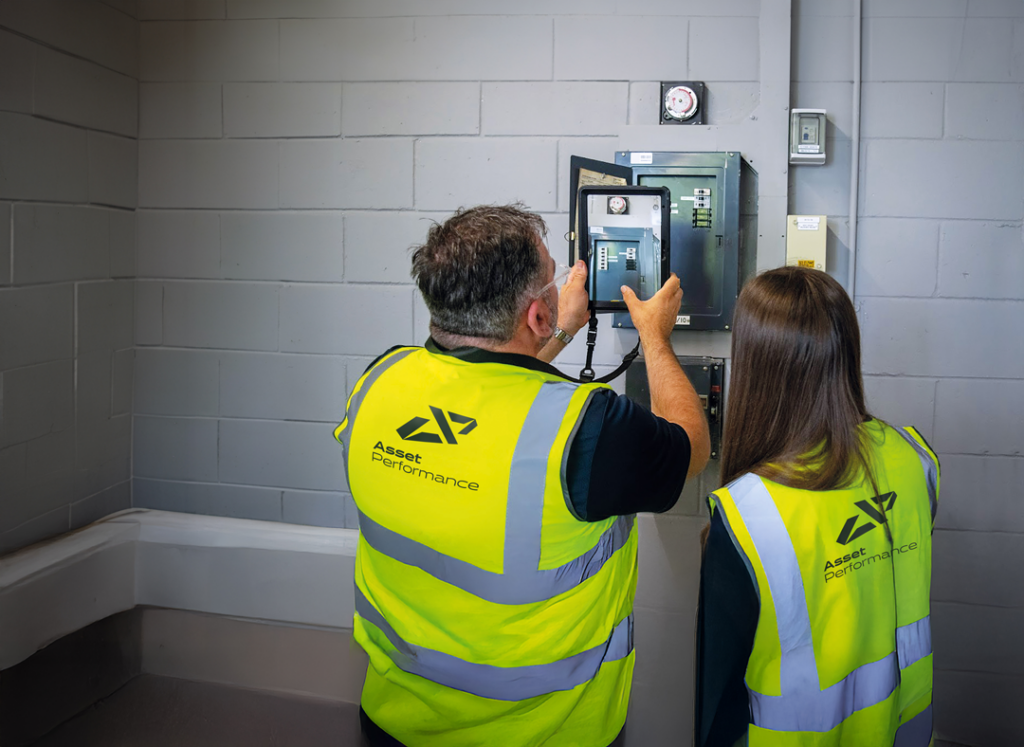
Establishing an accurate asset baseline helps organisations understand these relationships and provides greater visibility of the physical infrastructure supporting operational processes.
Asset verification can also identify gaps or inconsistencies in existing asset information, particularly where facilities have evolved over many years through equipment replacement, extensions and changes in production requirements.
Using asset condition to understand operational risk
Condition assessment adds another dimension to the asset register.
Rather than simply knowing that an asset exists, organisations can begin to understand its physical condition and identify where deterioration may represent future operational or financial risk.
This becomes particularly valuable when condition is considered alongside asset criticality.
An asset in poor condition does not automatically represent the greatest business risk. Equally, a relatively small component supporting a critical production process may have a significant consequence of failure.
Combining asset condition, criticality and operational context allows manufacturers to establish more meaningful priorities.
This can help identify assets requiring further investigation, additional maintenance, refurbishment or planned replacement before deterioration results in disruption.
Supporting a more targeted maintenance strategy
Manufacturing estates often contain assets with very different operational profiles.
Some may operate continuously. Others may support individual production processes or only become critical under particular operating conditions.
Applying the same maintenance philosophy across every asset can therefore result in resources being used inefficiently.
Better asset information allows maintenance strategies to be aligned more closely with condition, criticality and operational requirements.
For some assets, conventional planned preventive maintenance may remain appropriate. Others may benefit from condition-based approaches or closer monitoring.
The objective is not necessarily to reduce maintenance activity.
It is to ensure that maintenance effort is directed towards the assets where it provides the greatest operational value.
Reducing the impact of asset failure
Unexpected asset failure in a manufacturing environment can have consequences far beyond the cost of repairing the failed equipment.
Depending on the asset and its role within the production process, failure can contribute to:
- production downtime;
- lost output;
- emergency maintenance expenditure;
- disruption to labour and production schedules;
- damage to associated equipment; and
- wider operational or commercial consequences.
Understanding condition and criticality allows organisations to identify areas where those consequences may be greatest.
This doesn’t mean every failure can be predicted or prevented.
Instead, it allows maintenance and investment decisions to be informed by a clearer understanding of where failure presents the greatest risk to the operation.
Building a long-term CAPEX and lifecycle plan
Manufacturing assets can represent significant capital investments, often with very different expected lifecycles.
Without structured asset information, future expenditure can become dominated by immediate requirements and unexpected replacement.
Condition and lifecycle assessments provide an opportunity to look further ahead.
Assets approaching the end of their expected life can be identified and future replacement requirements modelled across multiple years.
This allows manufacturers to build a more structured CAPEX programme and understand where periods of significant future expenditure may occur.
It also provides evidence for decisions around whether assets should be maintained, refurbished, replaced or potentially rationalised.
For large manufacturing portfolios, applying a consistent methodology across multiple facilities can provide an organisation-wide view of future asset investment requirements.
Connecting asset data with business decisions
The greatest value from technical asset management comes when physical asset information moves beyond the asset register.
Condition, lifecycle, criticality and cost information can be analysed together to provide a clearer picture of operational and financial exposure.
This can help decision-makers answer questions such as:
Which assets present the greatest operational risk?
Where is investment likely to be required over the next five or ten years?
Which facilities carry the greatest lifecycle liability?
Where should maintenance and capital resources be prioritised?
This turns asset data into something more useful: asset intelligence that can support operational and investment decisions.
Technical asset management across manufacturing portfolios
The challenge becomes greater when an organisation operates multiple manufacturing facilities.
Different sites may use different asset hierarchies, maintenance systems, condition methodologies or data standards.
That makes comparison difficult.
Establishing a consistent approach to asset verification, condition assessment and lifecycle planning allows information to be compared across the portfolio.
Instead of viewing each factory independently, organisations can begin understanding asset risk and financial exposure at site, regional and portfolio level.
This provides leadership teams with greater visibility of where investment is required and allows competing priorities to be evaluated using consistent evidence.
From physical assets to actionable intelligence
Effective technical asset management in manufacturing starts with understanding the physical environment.
But collecting the data is only the beginning.
The objective should be to connect asset verification, condition, criticality, maintenance requirements, lifecycle and financial exposure so that organisations can make better-informed decisions about their manufacturing estate.
Asset Performance supports manufacturing and production organisations in establishing reliable asset baselines and turning physical survey information into actionable asset intelligence.
From individual facilities to complex multi-site portfolios, the aim remains the same:
Understand what you have. Understand its condition and risk. Then use that evidence to decide what happens next.
Lets Talk
Contact Us
We work with asset owners, FM providers, and consultants to deliver clear, data-led insight across complex estates. Whether you're exploring an initial survey or looking to improve long-term asset performance, get in touch and we’ll point you in the right direction.
408, The White Studios, Templeton St, Glasgow