
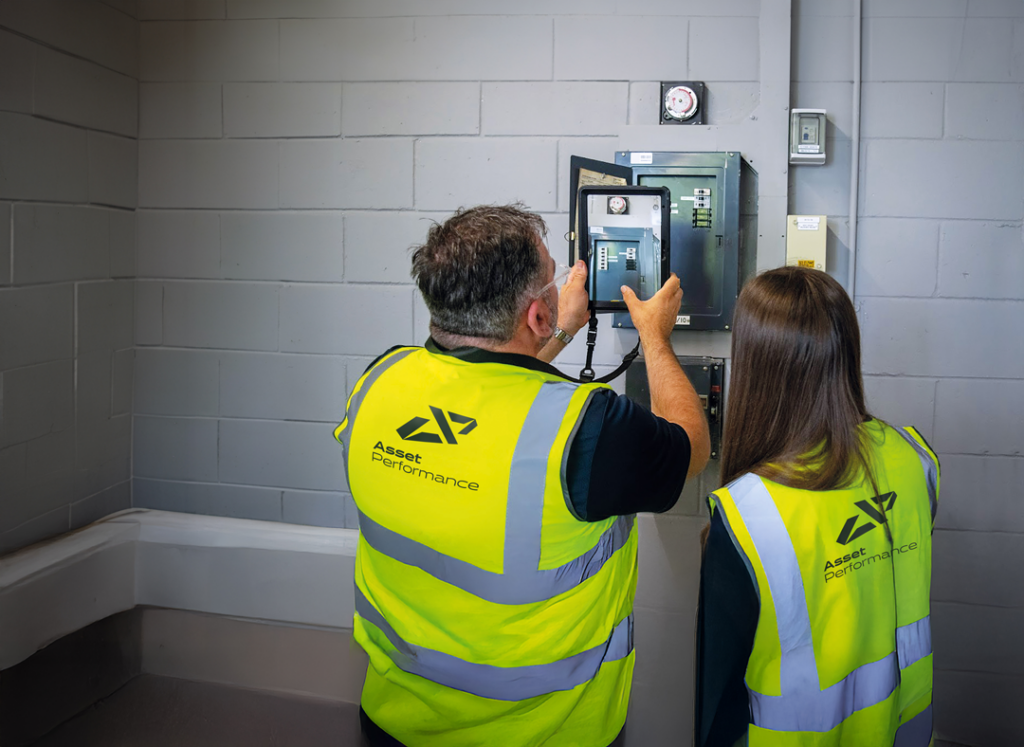

Asset verification is often treated as a job to be completed.
Survey the building. Record the assets. Apply the tags. Upload the register.
Job done.
Except the real value of asset data has very little to do with the spreadsheet delivered at the end of a survey. Its value comes from the decisions that information allows an organisation to make afterwards.
If reliable data helps an FM provider price and resource a contract more accurately, it has value. If it identifies a critical asset with no redundancy before it fails, it has value. If it provides the evidence needed to prioritise capital investment, it has value.
An asset register is not the outcome. It is the starting point.
Bad data has a cost
Almost every significant FM decision has an asset data dependency somewhere behind it.
How many engineers are required? What should the maintenance regime look like? Which assets have statutory requirements? Where are the operational risks? What needs replacing over the next five years? How much capital should be allocated?
All of those questions can be answered with poor asset data.
The problem is that the answers will be poor too.
The risk associated with an inaccurate asset register therefore extends far beyond a few missing assets. Decisions worth hundreds of thousands or millions can ultimately be based upon information that nobody has properly validated.
That changes the importance of establishing an accurate asset baseline considerably.
Knowing what you have is only the beginning
A basic asset register might tell you there is a pump in a plantroom.
Useful, perhaps. But not particularly valuable on its own.
What matters is understanding what that pump serves, its specification and condition, how critical it is, whether redundancy exists, whether replacement components remain available and what happens operationally if it fails.
This is where asset data begins to become asset intelligence.
A pump in average condition with full redundancy may represent relatively little immediate concern. The same pump supplying a critical process, with no redundancy and a twelve-week replacement lead time, represents something entirely different.
The physical asset has not changed.
Our understanding of its context has.
That additional information is what allows organisations to identify, prioritise and manage risk rather than simply document their estate.
Better data creates a better maintenance model
Maintenance regimes are frequently influenced by inherited information.
Assets are removed but remain on maintenance schedules. New equipment is installed but never added. Records are duplicated. Classifications are incorrect. Historic maintenance tasks continue because nobody has revisited why they exist.
A verified asset baseline provides an opportunity to reset that position.
Maintenance can instead be aligned with the equipment actually installed and take account of asset type, operating environment, criticality, statutory requirements and manufacturer recommendations.
For FM providers, that creates a stronger basis for labour planning, subcontractor procurement and service costing.
For clients, it provides greater transparency over exactly what they are paying to maintain.
Capital planning needs more than a condition score
Knowing that an asset is in poor condition is useful.
Knowing what intervention is required, when it is likely to be required, what it will cost and what happens if it is deferred is considerably more useful.
Credible lifecycle planning therefore needs to connect verified asset information with appropriate cost information.
And replacement cost rarely means simply finding the catalogue price of a new asset.
Access, removal, disposal, enabling works, installation, testing, commissioning, professional fees and contingency can all contribute to the real cost of intervention.
Applied consistently across a verified asset population, this changes the value of a condition survey.
Individual observations become a forward investment programme.
Instead of saying we think we need this money, an organisation can demonstrate the condition, risk, required intervention, likely timing and anticipated cost.
That creates a much stronger basis for capital decision-making.
Asset data begins ageing immediately
One of the most overlooked challenges comes after the initial survey.
A new AHU is installed. A boiler is replaced. A pump is removed. A refurbishment changes how a system operates. Significant repairs improve the condition of an existing asset.
The physical estate changes constantly.
Unless the asset information changes with it, the digital and physical estates begin to diverge.
Eventually, confidence in the register declines and another verification exercise is commissioned.
The problem may not have been the original survey at all. It may simply have been the absence of an effective process for maintaining the information afterwards.
Good asset management therefore requires data governance as well as data collection.
Changes need clear ownership. New assets need to enter maintenance regimes. Removed assets need to be retired correctly. Projects need to update records at completion. Condition and cost information need periodic review.
An asset register should be a living operational record, not a photograph of an estate taken several years ago.
Turning asset data into something useful
Different stakeholders will inevitably see different value within the same dataset.
Engineering teams need maintenance and technical information. Compliance teams need evidence of statutory requirements. Operations teams need to understand resilience and resource demand. Finance teams need visibility of liabilities and future capital requirements.
The information becomes valuable because it supports each of those decisions.
At Asset Performance, we believe an important question should therefore be asked before anybody arrives on site with a tablet:
What decisions does this information need to support?
The answer determines what should be collected and how that information should ultimately be structured.
Asset verification may be the starting point. But depending on the objective, condition, criticality, redundancy, compliance, lifecycle, cost and future intervention requirements may all be needed to create a genuinely useful picture of the estate.
Collecting asset data is relatively straightforward.
Creating information that people trust — and can use to make better decisions — is where its real value lies.
Lets Talk
Contact Us
We work with asset owners, FM providers, and consultants to deliver clear, data-led insight across complex estates. Whether you're exploring an initial survey or looking to improve long-term asset performance, get in touch and we’ll point you in the right direction.
408, The White Studios, Templeton St, Glasgow