
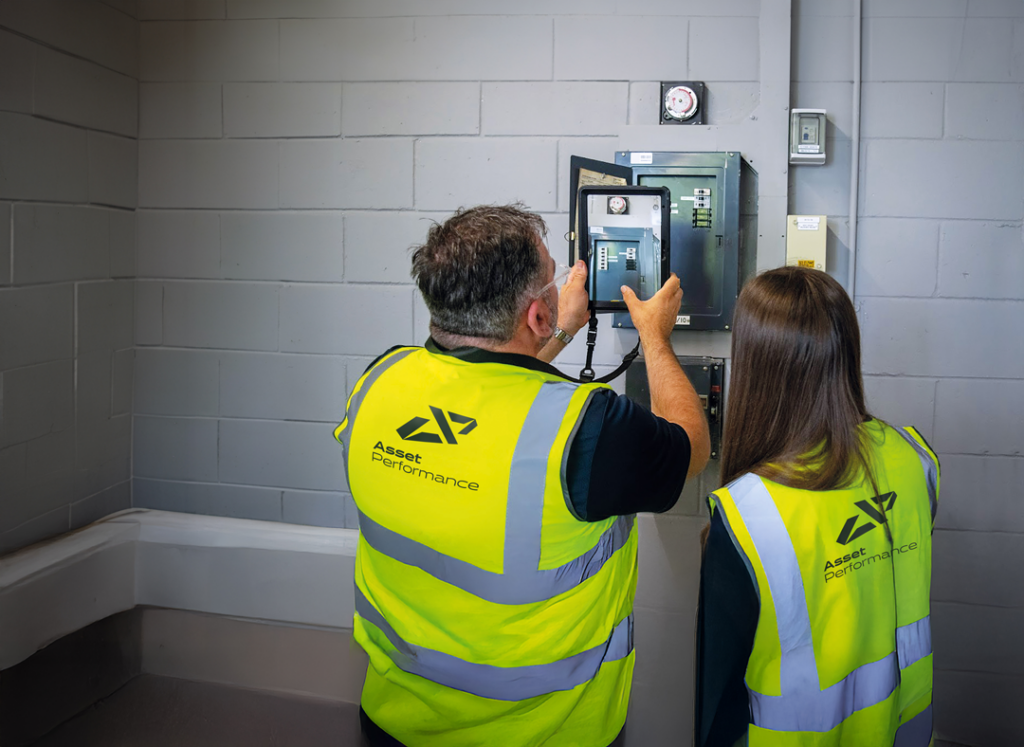

Condition surveys give organisations something incredibly useful: a structured view of the physical state of their assets.
But a condition score alone does not tell you what to do next.
Two assets can have exactly the same condition rating and represent completely different levels of risk, investment priority and operational concern.
Understanding that distinction is what turns condition assessment from a surveying exercise into a decision-making tool.
Condition tells you what an asset looks like today
At its simplest, condition assessment establishes the current physical state of an asset.
Is it performing as expected? Is there visible deterioration? Has maintenance been effective? Is intervention required?
That creates an important baseline.
The problem arises when condition is treated as the only measure of priority.
An asset in poor condition does not automatically represent the greatest risk within an estate. Equally, an asset in apparently reasonable condition should not automatically be considered low priority.
Context matters.
Criticality changes the picture
Consider two identical pumps, both assessed as being in poor condition.
The first operates as part of a duty/standby arrangement. If it fails, another pump automatically takes over.
The second serves a critical process with no redundancy.
Their condition may be identical.
Their consequences of failure are not.
The second asset potentially requires a much higher level of attention because the operational exposure associated with failure is significantly greater.
Condition therefore needs to be considered alongside criticality.
What does the asset serve? How important is that service? What would happen if it stopped operating? How quickly could service be restored?
Without those answers, condition provides only part of the picture.
Redundancy matters too
Redundancy can fundamentally alter how organisations prioritise intervention.
An ageing asset with a fully operational standby may present an acceptable short-term risk.
An equivalent asset with no standby could require immediate action.
This becomes particularly important across complex estates where individual pieces of equipment may support business-critical environments, production processes, healthcare activities, data infrastructure or other essential operations.
Knowing an asset exists and understanding its condition is useful.
Knowing what happens when it fails is considerably more valuable.
Remaining life isn’t an expiry date
Lifecycle planning often introduces another measure: expected remaining life.
This can be extremely useful, but it also needs context.
An asset reaching the end of its theoretical life does not necessarily need replacing tomorrow.
Operating environment, utilisation, maintenance history and actual condition can all influence its realistic remaining service life.
Conversely, equipment may deteriorate much faster than standard lifecycle assumptions suggest.
This is why lifecycle modelling works best when expected life is combined with actual condition and technical assessment rather than treated as a fixed countdown.
The objective should not be to replace equipment because a spreadsheet says it is old.
It should be to understand when intervention represents the most appropriate technical, operational and financial decision.
Cost influences priority
Risk cannot be separated entirely from money.
Once condition, criticality and lifecycle are understood, organisations still need to determine the financial implications.
What will intervention cost?
Can the asset be repaired rather than replaced?
Are enabling works required?
Could replacement be incorporated into another planned project?
Would delaying intervention increase the eventual cost?
A relatively inexpensive intervention that removes a significant operational risk may be an obvious priority.
A major replacement carrying substantial cost but limited immediate risk may reasonably sit within a longer-term capital programme.
Neither decision can be reached from condition alone.
From condition assessment to investment intelligence
The most valuable condition surveys do more than identify defects.
They create a structured evidence base that allows organisations to understand:
What condition is the asset in?
How important is it?
What happens if it fails?
Is redundancy available?
When is intervention likely to be required?
What is that intervention likely to cost?
Taken together, those questions create a much stronger picture of asset risk.
They also allow capital planning to become more defensible.
Instead of simply presenting a list of poor-condition assets, organisations can demonstrate why particular interventions should happen first and what the consequences of deferral may be.
At Asset Performance, that distinction is important.
Condition assessment should tell you more than what is wrong with an estate.
It should help you understand what matters most — and what you should do about it.
Lets Talk
Contact Us
We work with asset owners, FM providers, and consultants to deliver clear, data-led insight across complex estates. Whether you're exploring an initial survey or looking to improve long-term asset performance, get in touch and we’ll point you in the right direction.
408, The White Studios, Templeton St, Glasgow