
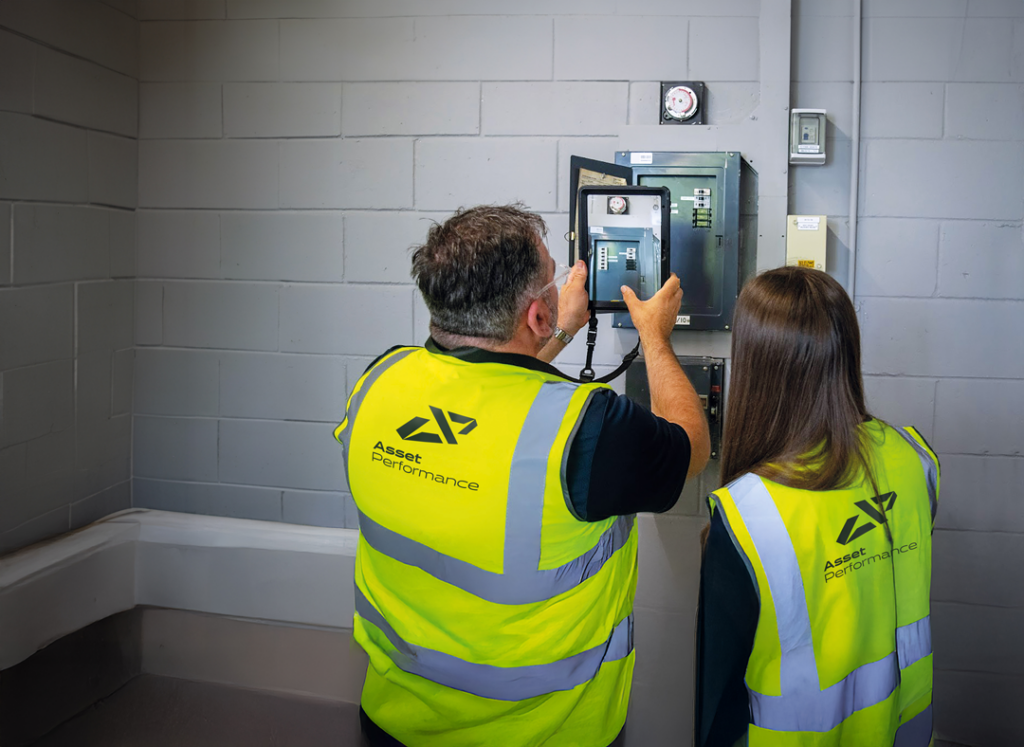

A survey can identify what assets an organisation owns and the condition they are in.
A capital plan needs to answer a much harder question:
What are we going to have to spend, where and when?
There is a significant gap between those two outputs.
Bridging it requires verified asset information, condition assessment, lifecycle assumptions, technical judgement and realistic cost data to work together.
Get that right and an asset survey becomes much more than a record of today’s estate.
It becomes evidence for tomorrow’s investment decisions.
Start with an accurate baseline
Every lifecycle model depends on the quality of the information underneath it.
If assets are missing, duplicated or incorrectly classified, the financial forecast built on that data will inherit those weaknesses.
The first step is therefore relatively straightforward: establish what is actually there.
That means understanding the asset population, its specification and relevant technical characteristics before attempting to predict future investment.
A capital plan based on an unreliable asset baseline may look sophisticated.
That doesn’t make it accurate.
Understand current condition
Age is useful, but it does not tell the whole story.
Two assets installed in the same year may have experienced very different operating conditions.
One may have been maintained well and operate in a relatively benign environment. Another may have run continuously under demanding conditions with limited maintenance.
Their theoretical replacement dates may be identical.
Their actual requirements may not be.
Condition assessment provides the evidence needed to challenge generic lifecycle assumptions and understand where deterioration is occurring faster or slower than expected.
This is particularly important when planning across large portfolios, where small changes in assumptions can materially affect future capital requirements.
Define the intervention
A lifecycle plan should not simply contain a replacement year.
It should identify what is expected to happen.
Does the asset require full replacement? Could refurbishment extend its useful life? Is a major component likely to require renewal? Can intervention be coordinated with another planned project?
This matters because the technical intervention determines the financial requirement.
Automatically replacing every asset at the end of an assumed life can significantly distort a capital forecast.
Technical judgement remains important.
Understand the real cost
An equipment purchase price is rarely the same as a project cost.
Replacing a major building asset can involve removal and disposal of existing equipment, temporary services, access equipment, builders’ work, electrical alterations, controls integration, commissioning and professional fees.
Some projects may require significant enabling works simply to get new equipment into position.
A credible capital plan therefore needs consistent cost assumptions that reflect the likely scope of intervention rather than just the value of the replacement equipment.
Without that, a five-year forecast can provide false confidence.
The numbers may be precise.
The costs behind them may not be.
Prioritise rather than simply total
Once lifecycle requirements are modelled across an estate, the result can be uncomfortable.
Capital demand rarely arrives in a perfectly even annual pattern.
One year may contain several major replacements. Another may appear relatively light.
Simply adding up everything theoretically due for replacement does not necessarily create a practical investment plan.
Prioritisation is required.
Condition, criticality, redundancy, operational impact and the consequences of deferral can all help determine which interventions genuinely need to happen and which can reasonably move.
This is where technical asset information becomes particularly valuable.
The conversation moves from:
“These assets are due for replacement.”
to:
“These are the interventions we believe should be prioritised, these are the reasons, and this is the risk associated with delaying them.”
That is a very different capital conversation.
Look beyond year five
A five-year capital plan should not exist in isolation.
It is a window into a much longer asset lifecycle.
Understanding what sits beyond the immediate planning period can expose future peaks in investment demand and give organisations more time to respond.
If a significant proportion of an estate’s major plant is approaching replacement at approximately the same time, that is strategically important even if the expenditure sits six or seven years away.
Early visibility creates options.
Projects can be phased. Budgets can be prepared. Alternative technical strategies can be investigated. Major interventions can potentially be aligned with refurbishment, decarbonisation or wider estate programmes.
Without visibility, those same requirements eventually become surprises.
A capital plan should remain alive
Just like the asset register beneath it, a lifecycle plan should change.
Assets deteriorate. Projects are completed. Costs move. Equipment is replaced. Investment is deferred. Operational priorities change.
The forecast should respond accordingly.
A five-year capital plan created from a single condition survey and never updated will gradually become less representative of the estate it is supposed to describe.
The strongest approach is therefore cyclical.
Verify. Assess. Model. Prioritise. Update.
At Asset Performance, lifecycle planning is about creating visibility of future asset requirements before they become immediate problems.
Because a capital plan should not simply tell an organisation how much it might spend.
It should help explain why, where and when that investment is likely to be needed.
Lets Talk
Contact Us
We work with asset owners, FM providers, and consultants to deliver clear, data-led insight across complex estates. Whether you're exploring an initial survey or looking to improve long-term asset performance, get in touch and we’ll point you in the right direction.
408, The White Studios, Templeton St, Glasgow