

Most organisations know how much they spend on maintenance.
A more difficult question is whether they know exactly what that expenditure is maintaining.
Maintenance programmes accumulate history.
Contracts are renewed. Asset registers are inherited. New equipment is installed. Old equipment is removed. Maintenance frequencies pass from one provider to another.
Over time, the relationship between the physical estate and the maintenance model can become increasingly difficult to see.
That creates cost, operational and commercial risk for both clients and FM providers.
Maintenance plans inherit assumptions
A new FM provider rarely starts with a blank sheet of paper.
There is usually an existing asset register, existing PPM schedule and historic specification.
Those records become part of mobilisation.
The obvious assumption is that they represent the estate accurately.
But what if they don’t?
An asset may have been removed years ago but remain on the register. Replacement equipment may have been installed without being added. Multiple records may describe the same physical asset. Classification may be incorrect.
If that information flows directly into the maintenance model, inaccuracies become planned activity.
The organisation isn’t just holding poor data.
It may be paying for the consequences.
Verification resets the baseline
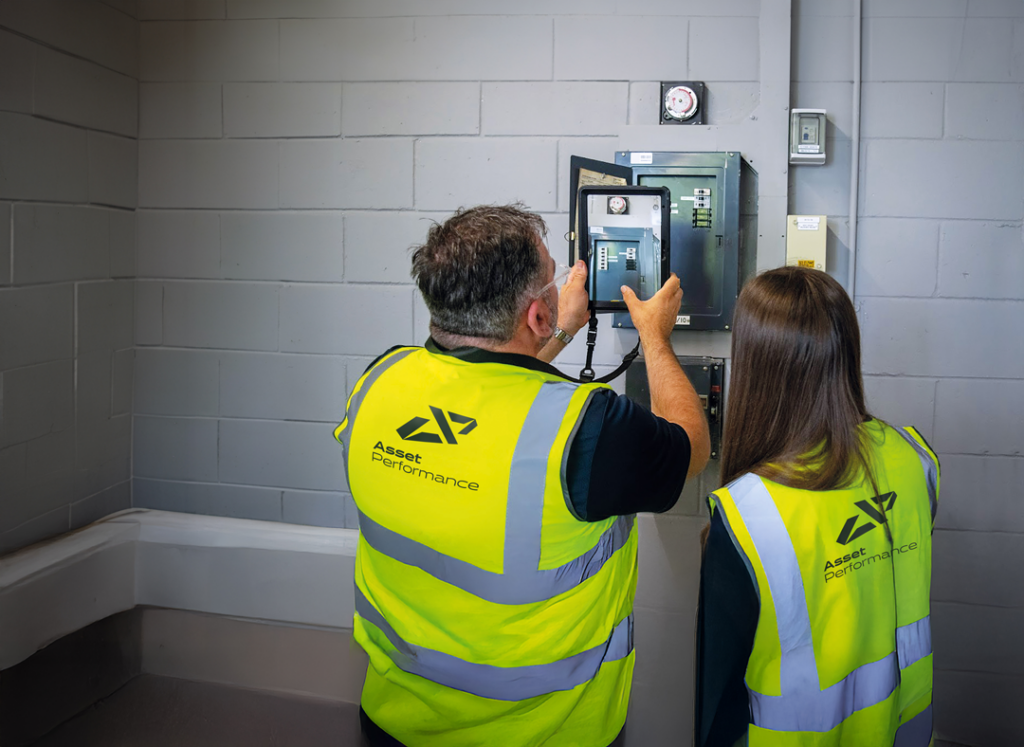
Physical asset verification provides an opportunity to establish what is actually installed.
That sounds simple, but it has significant implications for maintenance.
Once the asset population is trusted, organisations can begin asking better questions about the regime attached to it.
Should this asset be maintained?
What maintenance does it actually require?
Is there a statutory requirement?
What does the manufacturer recommend?
Does its operating environment justify a different frequency?
How critical is it?
Could condition-based or risk-based maintenance be more appropriate?
The objective isn’t simply to reduce maintenance.
It is to make sure maintenance effort is being applied where it creates value or manages a genuine requirement.
Asset classification matters
Different equipment creates different maintenance demand.
A generic asset description may therefore be insufficient when building an accurate maintenance model.
Specifications, capacities, system relationships and asset types can influence both the task required and the competence needed to undertake it.
That affects labour.
It affects subcontractor requirements.
It affects specialist services.
And ultimately it affects cost.
This is why the quality and depth of information captured during verification matters.
A register containing 10,000 poorly classified assets does not necessarily provide a strong basis for maintaining a building simply because the quantity looks comprehensive.
Better asset data improves labour planning
Once the asset population and maintenance requirements are understood, organisations can begin translating tasks into resource demand.
How many maintenance hours does the estate genuinely require?
What skillsets are needed?
Which activities can be delivered internally?
Where are specialist subcontractors required?
How does workload vary across locations and throughout the year?
This can create a much stronger basis for labour loading and contract design.
For FM providers, it improves confidence when pricing and mobilising services.
For clients, it provides greater transparency around why particular resources are required.
That can make the maintenance conversation considerably more productive than simply debating whether a contract contains too many or too few engineers.
Better information can benefit both sides
There can sometimes be an assumption that reviewing a maintenance regime is primarily about finding savings for the client.
That is too simplistic.
Accurate information can benefit both client and provider.
The client gains a clearer understanding of what is being maintained and why.
The FM provider gains a more reliable basis for pricing, resource planning and procurement.
Both parties gain better visibility of asset risk.
And where verification identifies poor condition, obsolete equipment or required remedial work, it creates an evidence-based pipeline of activity rather than unexpected failures and reactive expenditure.
The objective should be a maintenance model that reflects the reality of the estate.
The cheapest maintenance plan isn’t necessarily the best one
Optimisation does not automatically mean doing less.
Verification may identify assets that have never entered the maintenance programme at all.
Critical equipment may be receiving insufficient attention. Statutory tasks may be missing. Particular operating environments may justify increased frequencies.
In those cases, an improved maintenance model could require additional activity.
But that additional activity has a reason behind it.
That distinction matters.
A good maintenance strategy is not simply the lowest-cost collection of tasks that can be delivered.
It balances compliance, reliability, criticality, condition, operational requirements and cost.
Start with what is actually there
Before deciding how many engineers an estate needs or what its maintenance programme should cost, there is a more fundamental question to answer:
What are we actually maintaining?
A verified asset baseline provides the evidence needed to answer it.
From there, maintenance requirements can be challenged, resource demand can be modelled and service costs can be understood with considerably greater confidence.
At Asset Performance, this is why we see asset verification and maintenance strategy as closely connected.
Knowing what you have is important.
Knowing what it genuinely requires from you every year is where that information starts affecting operational performance and cost.
Lets Talk
Contact Us
We work with asset owners, FM providers, and consultants to deliver clear, data-led insight across complex estates. Whether you're exploring an initial survey or looking to improve long-term asset performance, get in touch and we’ll point you in the right direction.
408, The White Studios, Templeton St, Glasgow